
On This Page
Introduction: The Unseen SEO Impact of Load Shedding in South Africa
For businesses in South Africa, load shedding is a harsh reality. Beyond the immediate disruption to daily operations, it presents a significant, often overlooked, challenge to your online presence: website performance and SEO. When the power goes out, it doesn't just affect your physical office; it can cripple your website, leading to slow loading speeds, intermittent downtime, and a frustrated user base. For Google, these are critical signals of a poor user experience, directly impacting your search engine rankings and organic traffic.
In a competitive digital landscape, every second of downtime and every extra millisecond of loading time can cost you customers and push your site down the SERPs (Search Engine Results Pages). This comprehensive guide will dissect the direct and indirect SEO consequences of load shedding in South Africa. More importantly, we'll provide a roadmap of practical, actionable solutions, from hosting choices to content optimisation, ensuring your website remains a robust, high-performing asset that continues to attract and convert customers, even when the national grid is struggling.
How Load Shedding Directly Affects Your Website & SEO
The impact of load shedding on your website's performance is multi-faceted, and each facet carries significant SEO implications.

1. Downtime & Accessibility: Google Can't Crawl or Index What's Offline
The most immediate and severe impact of load shedding is server downtime. If your website's hosting server loses power or internet connectivity during an outage, your site simply goes offline. For Googlebot, the crawler that indexes your site, repeated or prolonged downtime means it can't access your pages. This leads to:
- Crawl Errors: Google Search Console will report an increase in server errors, signaling issues with your site's reliability.
- De-indexing: If Googlebot consistently finds your site unavailable, it may temporarily de-index pages, leading to a dramatic drop in rankings.
- Reduced Crawl Budget: Google allocates a "crawl budget" to each site. Downtime wastes this budget, meaning Google indexes fewer of your pages when your site is available.
2. Slow Page Speed & Core Web Vitals: User Experience Suffers, Rankings Drop
Even if your server has backup power, load shedding can impact network infrastructure, leading to slower internet speeds for your users. This directly affects your website's page speed and Core Web Vitals – critical ranking factors for Google:
- Largest Contentful Paint (LCP): Images and primary content load slowly, leading to a poor LCP score.
- First Input Delay (FID) / Interaction to Next Paint (INP): Server response times increase, making your site feel sluggish and unresponsive.
- Cumulative Layout Shift (CLS): Content shifts as resources load slowly, creating a frustrating user experience.
Poor Core Web Vitals scores translate directly into lower rankings and reduced visibility, as Google prioritizes sites that offer a superior user experience.
3. User Experience (UX) & Bounce Rate: Frustrated Visitors Leave
Imagine a potential customer trying to access your site during load shedding. If it's slow or unavailable, they're not going to wait. They'll bounce to a competitor. High bounce rates and short session durations signal to Google that your site isn't meeting user needs, further harming your rankings. This is especially true for local businesses where customers are often looking for immediate solutions (e.g., "emergency plumber near me").
4. Reduced Conversion Rates: Leads & Sales Take a Hit
Ultimately, all these issues lead to a decline in conversion rates. If your site is down or too slow to use, visitors can't fill out forms, make purchases, or call your business. This directly impacts your bottom line and negates all your SEO efforts.
Strategies for Load Shedding Resilient Website Performance & SEO
Building a website that withstands the impact of load shedding requires a proactive approach. Here are actionable solutions:
Hosting
Cloud redundancy
CDN
Content cache
Speed
Page optimize
Monitor
Track alerts
Mobile-First
Low bandwidth
Communicate
Manage trust
👈 Key
✓ Multi-layered approach to load shedding resilience
1. Strategic Hosting Choices: Powering Through Outages
Your choice of web host is paramount. Don't compromise here.
- Cloud Hosting with Redundancy: Opt for reputable cloud hosting providers (e.g., AWS, Google Cloud, Azure, or well-established South African cloud providers) that offer robust infrastructure with built-in redundancy and backup power systems. These environments are designed for high availability.
- South African Data Centres (if applicable): If your target audience is exclusively in SA, a local data centre can reduce latency and improve speed for local users, though global cloud providers often have excellent SA presence.
- Managed WordPress Hosting: If you're on WordPress, choose a managed host (e.g., Kinsta, WP Engine) known for performance, uptime, and proactive server management during outages.
- SLA & Support: Ensure your hosting provider offers a strong Service Level Agreement (SLA) for uptime and has 24/7 technical support that understands SA's unique challenges.
2. Content Delivery Networks (CDNs): Speed & Uptime Across the Globe (and SA)
A Content Delivery Network (CDN) is a distributed network of servers that caches your website's static content (images, CSS, JavaScript) and delivers it from the server geographically closest to the user. This significantly improves page speed and offers a layer of resilience:
- Improved Speed: Reduces latency for users across different regions of SA, as content is served from a local cache.
- Enhanced Uptime: If your origin server experiences an outage, a CDN can often continue serving cached versions of your pages, maintaining some level of accessibility.
- Load Balancing: CDNs distribute traffic, preventing single points of failure.
- Examples: Cloudflare (offers a free tier), Akamai, Amazon CloudFront.
3. Aggressive Page Speed Optimisation: Every Millisecond Counts
Even with great hosting and a CDN, your website itself needs to be lean and fast. This is crucial for both SEO and user experience, especially during times of compromised network speeds.
- Image Optimisation: Compress and lazy-load all images. Use modern formats like WebP.
- Minify & Combine Files: Reduce the size of your CSS, JavaScript, and HTML files.
- Reduce Server Response Time (TTFB): Optimise database queries, use efficient code, and ensure your server-side processes are lean.
- Prioritise Above-the-Fold Content: Defer loading of non-critical resources to ensure the visible portion of your page loads instantly.
- Limit Third-Party Scripts: External scripts (trackers, ads) can slow down your site. Audit and remove any non-essential ones.
4. Robust Monitoring & Alerting: Know Before Your Customers Do
You can't fix what you don't know is broken. Implement comprehensive monitoring systems.
- Uptime Monitoring: Use services like UptimeRobot, Pingdom, or Freshping to monitor your website's availability from multiple locations (ideally including South African nodes). Set up instant alerts (email, SMS, Telegram) for downtime.
- Google Search Console: Regularly check the "Core Web Vitals" and "Coverage" reports for performance regressions or crawl errors. Enable email notifications for critical issues.
- Google Analytics: Monitor traffic drops, bounce rate spikes, and conversion rate declines during known load shedding periods to quantify the impact.
5. User-Centric Design for Low Bandwidth: Mobile-First and Minimalist
Design your website with the understanding that not all users have fast, stable internet. This is particularly relevant in South Africa.
- Prioritise Mobile-First: Ensure your mobile site is not just responsive but *optimized* for functionality and speed.
- Minimalist Design: Avoid overly heavy design elements, large videos (unless critical and highly optimized), and complex animations that consume bandwidth.
- Text Over Large Images: Convey information effectively using text where possible, rather than relying solely on large, slow-loading images.
6. Proactive Communication & Local SEO: Managing Expectations
Beyond technical fixes, clear communication during load shedding can maintain customer trust and even improve local SEO signals.
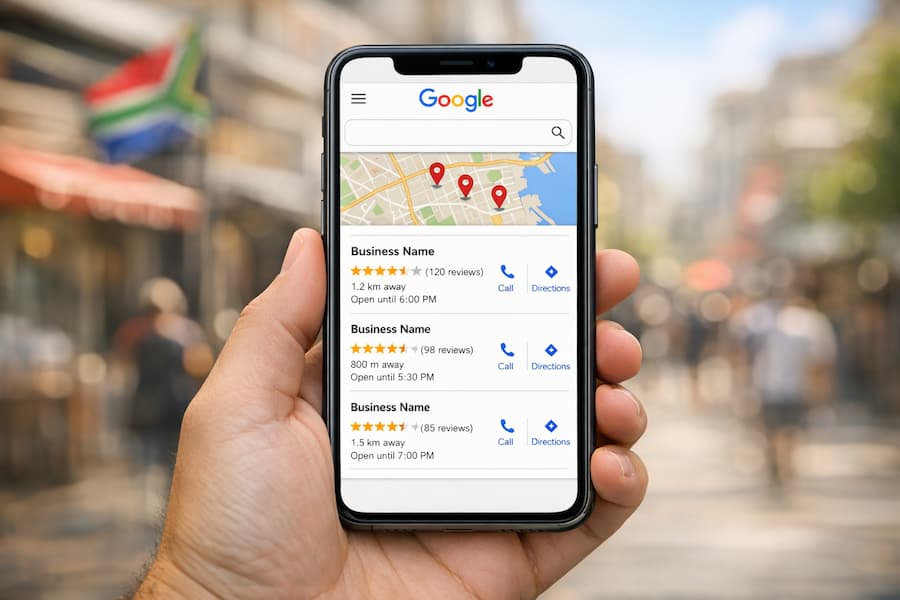
- Update Google Business Profile: Use GBP posts to inform customers about potential service disruptions, updated operating hours, or alternative contact methods during outages. Highlight your load shedding resilience if you have it.
- Dedicated Load Shedding Page/Content: Create a specific page on your website or a blog post that addresses how your business handles load shedding. This is excellent for long-tail SEO and provides valuable information.
- Social Media Updates: Keep your social media channels active with real-time updates during outages.
Conclusion: Building Digital Resilience in a Challenging Environment
Load shedding is a reality for South African businesses, but it doesn't have to cripple your website's performance and SEO. By proactively implementing strategic hosting solutions, CDNs, aggressive page speed optimisation, robust monitoring, and user-centric design, you can build a digital presence that is resilient, fast, and accessible even during power outages.

Investing in these solutions not only protects your Google rankings and organic traffic but also demonstrates a commitment to your customers, maintaining their trust and ensuring your business continues to thrive online. Don't let load shedding dim your digital light.
Is your website ready for load shedding? Contact NexusSEO for a free performance audit and ensure your online presence is built for resilience.