
On This Page
Introduction: Mobile-First is Non-Negotiable for SA SEO
South Africa is unequivocally a mobile-first nation. For millions of South Africans, a smartphone is their primary (and often only) device for accessing the internet. This reality, coupled with factors like high data costs and varying network speeds, creates a unique digital landscape that demands a highly specialised approach to SEO.
Google has been explicit: mobile-first indexing is the default for most websites, meaning the search giant primarily uses the mobile version of your content for indexing and ranking. If your website isn't optimised for mobile users – if it's slow, clunky, or missing content on smaller screens – you're actively being penalised. This comprehensive guide will equip South African businesses with the essential mobile-first SEO strategies needed to not only rank higher on Google but also deliver a superior user experience that converts mobile traffic into leads and sales, addressing the specific challenges of data costs and network limitations.
The South African Mobile Landscape: Challenges & Opportunities
Understanding the unique characteristics of how South Africans access the internet via mobile is the first step to crafting an effective mobile-first SEO strategy.
1. High Data Costs: The Need for Lean & Efficient Websites
Compared to many developed nations, mobile data in South Africa remains relatively expensive for the average consumer. This means users are highly conscious of their data consumption. Websites that are image-heavy, load large video files automatically, or require excessive JavaScript will quickly drain a user's data bundle, leading to frustration and a high bounce rate. For mobile-first SEO in SA, lean and efficient design is paramount.
2. Variable Network Speeds: Optimising for Less-Than-Ideal Conditions
While 5G is expanding, many South Africans still rely on 3G or slower 4G networks, particularly in rural or semi-urban areas. This directly impacts page loading times. Even in urban centers, network congestion can lead to slower speeds. Your mobile site must be built to perform optimally even under less-than-ideal network conditions. Speed optimisation is not a luxury; it's a necessity.
3. Dominance of Smartphones: Prioritising Touch & Responsiveness
Smartphones are the gateway to the internet for most South Africans. This means touch-based navigation, legible font sizes, and appropriately sized touch targets (buttons, links) are critical. Responsive design is no longer a 'nice-to-have' but a fundamental requirement to ensure your site adapts seamlessly to various screen sizes.
4. Local Search Intent: Mobile Users Looking for Immediate Solutions
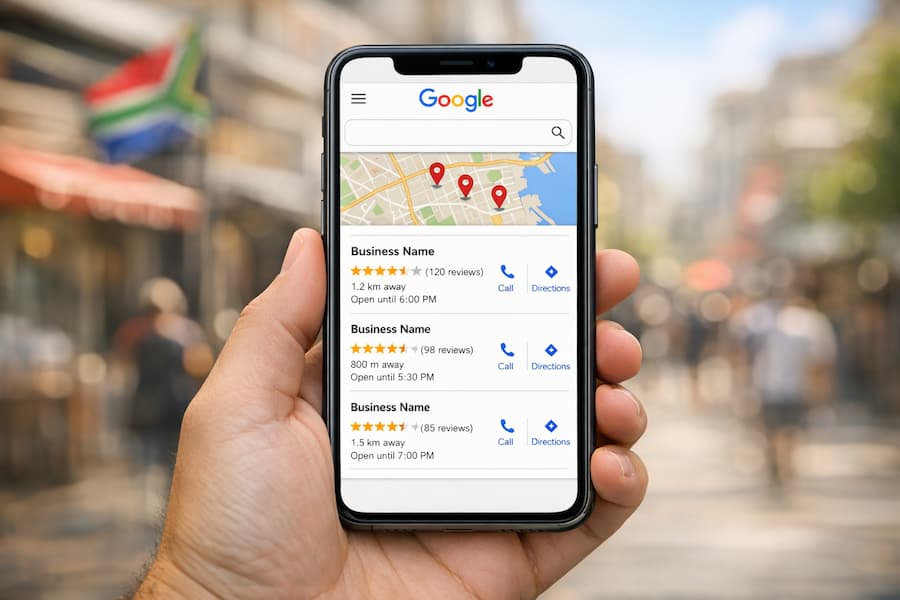
Mobile searches often carry strong local intent. Users are on the go, looking for immediate answers, directions, or contact information for businesses "near me." Your mobile SEO strategy must align with this behavior, prioritising local visibility and easy access to critical business information.
Core Mobile-First SEO Strategies for South Africa
Here are the actionable steps to ensure your website excels in South Africa's mobile-first, data-conscious landscape:

Design
Responsive
Speed
Aggressive optimize
Core Web
Vitals optimize
Content
Parity & UX
Schema
Structured data
Local
Mobile + Local
👈 Intent
✓ Integrated mobile-first approach for SA success
1. Implement Responsive Design (The Only Option)
Responsive web design ensures your website automatically adjusts its layout, images, and content to fit any screen size, from desktops to tablets and smartphones. This is Google's recommended approach for mobile-friendliness.
- Use Fluid Grids & Flexible Images: Ensure your layout adapts to percentages, not fixed pixels, and images scale dynamically.
- Viewport Meta Tag: Include
<meta name="viewport" content="width=device-width, initial-scale=1">in your HTML's<head>section to tell browsers to render the page at a scale that matches the device width. - Test Thoroughly: Use Google's Mobile-Friendly Test and your own devices to verify your site's responsiveness across various screen sizes.
2. Aggressive Page Speed Optimisation (Beyond the Basics)
Given data costs and network speeds, every millisecond counts. Go beyond standard optimisations.
- Image Optimisation: Compress all images without compromising quality. Use modern formats like WebP. Implement lazy loading so images only load when they enter the viewport.
- Minify & Compress Code: Reduce the file size of your HTML, CSS, and JavaScript by removing unnecessary characters (minification) and enabling Gzip/Brotli compression on your server.
- Leverage Browser Caching: Configure your server to tell browsers to store static assets (CSS, JS, images) locally for a period, so repeat visitors experience faster load times.
- Reduce Server Response Time (TTFB): Optimise your backend code, database queries, and choose a fast, reliable hosting provider with a presence in South Africa or a robust CDN.
- Prioritise Critical CSS & JavaScript: Only load essential CSS and JavaScript required for the initial above-the-fold content. Defer the rest.
3. Optimize Core Web Vitals (The Ranking Standard)
Google's Core Web Vitals (LCP, FID/INP, CLS) are crucial ranking factors. Optimising these is essential for mobile-first SEO.
- Largest Contentful Paint (LCP): Identify and optimise the largest content element in your viewport. Often a hero image or large text block.
- Interaction to Next Paint (INP): Ensure your site is highly responsive to user interactions. Minimise long tasks and optimize JavaScript execution.
- Cumulative Layout Shift (CLS): Prevent unexpected layout shifts. Reserve space for images, ads, and embeds.
- Monitor with Google Search Console: Regularly check your Core Web Vitals report in GSC to identify and fix issues.
4. Mobile Content Parity & User Experience
Ensure that the content and functionality on your mobile site are equivalent to your desktop site. Google needs to see the same valuable content on mobile.
- No Hidden Content: Don't hide essential text, images, or videos on mobile using CSS
display: none. If it's important for desktop, it's important for mobile. - Easy Navigation: Implement intuitive, touch-friendly navigation (e.g., hamburger menus for primary navigation, clear calls to action).
- Legible Text: Use font sizes that are easily readable on smaller screens (minimum 16px for body text).
- Appropriate Touch Targets: Ensure buttons and links are large enough and have enough spacing to be easily tapped without accidental clicks (minimum 48px target size).
5. Structured Data (Schema Markup) for Mobile Context
Schema markup helps Google understand your content, and this is especially valuable for mobile users who are often looking for quick, specific answers.
- Implement FAQPage Schema: For FAQs, this can lead to rich results that provide instant answers on mobile SERPs.
- LocalBusiness Schema: Critical for local businesses; provides Google with your NAP, opening hours, services, and location, directly feeding into local pack results.
- Article Schema: For blog posts, this helps Google understand the content type and can enhance mobile search appearance.
6. Local SEO & Mobile-First Integration
Mobile searches often have strong local intent. Integrate your local SEO efforts with your mobile-first approach.
- Google Business Profile Optimization: Ensure your GBP is fully updated, active, and encourages reviews. This is paramount for mobile local search visibility.
- Location-Specific Content: Create content that targets "near me" searches and includes local keywords naturally.
- Click-to-Call/Map Buttons: Make it incredibly easy for mobile users to call you or get directions directly from your website or GBP.
Conclusion: Thriving in South Africa's Mobile-First Digital Economy
For South African businesses, a robust mobile-first SEO strategy is no longer a competitive advantage – it's a fundamental necessity. By diligently addressing the challenges of data costs and variable network speeds through aggressive optimisation, responsive design, and a keen focus on user experience, you can ensure your website ranks highly on Google, attracts more mobile traffic, and converts those visitors into valuable customers.

Embrace mobile-first, build for speed, and understand the unique needs of the South African mobile user. This is the pathway to digital success in our vibrant and ever-evolving market.
Ready to optimize your website for South Africa's mobile-first audience? Contact NexusSEO for a free mobile SEO audit and unlock your full online potential.