
On This Page
Introduction: Why Data-Driven SEO Reporting is Essential for SA Businesses in 2026
In the competitive digital landscape of South Africa, investing in SEO is no longer a luxury—it's a necessity. But how do you know if your SEO efforts are truly paying off? How do you demonstrate a clear return on investment (ROI) to stakeholders? The answer lies in robust SEO reporting and analytics. Without a systematic approach to tracking, measuring, and interpreting your performance data, your SEO strategy is essentially flying blind.
For South African businesses, understanding how users interact with your website, what keywords are driving traffic, and where your opportunities for growth lie is paramount. This comprehensive guide for 2026 will walk you through the essential steps of setting up your SEO analytics, tracking key metrics, and building insightful reports using powerful (and often free) tools like Google Analytics 4 (GA4) and Google Search Console. Learn to transform raw data into actionable intelligence that not only proves the value of your SEO but also guides your future digital strategy, ensuring sustainable organic growth.
The Foundation: Essential SEO Analytics Tools
Before you can report on anything, you need to collect the data. These are the indispensable tools for any South African business serious about SEO analytics.
1. Google Analytics 4 (GA4): Your Website's Behavioural Hub
GA4 is Google's latest analytics platform, focusing on event-driven data collection across websites and apps. It's a powerful tool for understanding user behaviour.
- Key Metrics: Organic traffic (sessions, users), engagement rate, conversions (leads, sales), user journey analysis, geographic performance (crucial for SA).
- Setup: Ensure GA4 is correctly installed on your website via Google Tag Manager or directly in your site's code. Configure key events (e.g., form submissions, button clicks, purchases) as conversions.
- SA Context: Segment your audience by region (Durban, Johannesburg, Cape Town) to understand local performance. Monitor device categories (mobile vs. desktop) given SA's mobile-first landscape.
2. Google Search Console (GSC): Your Performance in Google Search
GSC is a free tool from Google that provides invaluable data directly from the search engine. It shows how your site performs in Google Search.
- Key Metrics: Impressions, clicks, CTR (Click-Through Rate), average position for keywords, index coverage (errors, warnings), Core Web Vitals, mobile usability.
- Setup: Verify your website in GSC. Submit your XML sitemap.
- SA Context: Monitor keyword performance for local queries. Check for crawl errors or mobile usability issues that might disproportionately affect SA users on slower networks or older devices.
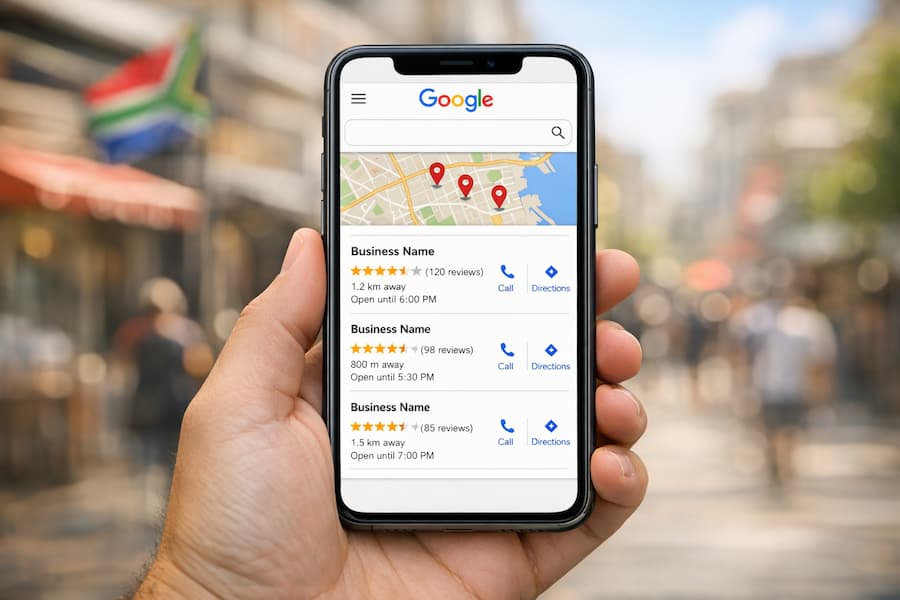
3. Google My Business (GBP) Insights: For Local SEO Dominance
If you're a local South African business, your Google Business Profile (GBP) is critical, and its insights are invaluable.
- Key Metrics: How customers find your business (direct, discovery, branded), search queries used, customer actions (calls, website visits, direction requests), photo views.
- Setup: Ensure your GBP is claimed, verified, and fully optimised.
- SA Context: Track calls and direction requests as direct local leads. Use query data to refine your local SEO strategy.
4. Paid SEO Tools (Optional, but Recommended for Growth)
Tools like Ahrefs, SEMrush, Moz, or Majestic SEO offer deeper insights into keyword research, competitor analysis, and backlink profiles.
- Key Metrics: Keyword difficulty, competitor rankings, backlink analysis (referring domains, anchor text), site audits.
- SA Context: Use these tools to identify local content opportunities and monitor local competitor strategies.
Building Effective SEO Reports for South African Businesses
Good reporting tells a story. It translates complex data into clear, actionable insights that demonstrate value.

1. Define Your KPIs (Key Performance Indicators)
What truly matters to your business? Focus on a few core metrics that directly align with your goals.
SEO Performance: 5 KPI Categories
- Awareness: Organic Impressions (GSC), Organic Users (GA4).
- Engagement: Engagement Rate (GA4), Bounce Rate (GA4), Pages per Session (GA4).
- Acquisition: Organic Clicks (GSC), Organic Sessions (GA4), New Users (GA4).
- Conversion: Form Submissions (GA4), Phone Calls (GBP/GA4), Online Sales (GA4), Lead Conversion Rate.
- Authority: Referring Domains (paid tools), Domain Rating/Authority (paid tools), Brand Mentions.
2. Choose Your Reporting Frequency & Format
How often do you need reports, and in what format?
- Weekly Snapshots: Quick checks on core metrics (traffic, rankings) for immediate adjustments.
- Monthly Reports: Comprehensive overview of performance, progress against KPIs, and next steps.
- Quarterly/Annual Reviews: Strategic deep dives, long-term trend analysis, and future planning.
- Formats: Dashboards (Google Looker Studio), PDF reports, Google Sheets, or direct tool interfaces.
3. Structure Your Reports for Clarity & Actionability
A good report is easy to understand and tells stakeholders what needs to be done.
- Executive Summary: A brief overview of key highlights and actionable insights.
- Performance Overview: Trends in organic traffic, rankings, and conversions.
- Keyword Performance: Top-performing keywords, new opportunities, and ranking changes.
- Content Performance: Which content pieces are driving traffic and conversions.
- Technical Health: Summary of Core Web Vitals, indexation status, and any critical issues (from GSC).
- Link Building Progress: New backlinks acquired, domain authority changes.
- Local SEO Insights: GBP performance, local queries, calls, and directions.
- Next Steps & Recommendations: Clear, actionable advice for the next reporting period.
4. Integrate Data for a Holistic View (Google Looker Studio)
Tools like Google Looker Studio (formerly Data Studio) allow you to pull data from GA4, GSC, GBP, and even Google Sheets into a single, interactive dashboard. This is ideal for South African businesses to get a comprehensive view of their digital performance.
- Connect Data Sources: Easily connect your Google accounts.
- Customisable Dashboards: Create visual, easy-to-understand reports tailored to your specific KPIs.
- Share & Collaborate: Share reports with stakeholders, allowing them to interact with the data.
Translating Data into Actionable Insights for the SA Market
Raw data is only useful if it leads to action. Here's how to interpret your reports for the South African context:
- Identify Local Opportunities: If GSC shows high impressions but low clicks for a local keyword, it might signal a need to improve your meta description or schema markup.
- Monitor Mobile Performance: Keep a close eye on GA4's mobile data and GSC's Core Web Vitals to ensure your site is performing optimally for SA's mobile-first audience.
- Address Load Shedding Impact: Correlate traffic dips with known load shedding schedules. Use this data to justify investment in more robust hosting or content around digital resilience.
- Refine Content Strategy: If certain blog posts are performing exceptionally well, create more content around those topics or expand them.
- Optimize GBP Based on Queries: If your GBP insights show a surge in "emergency" queries, ensure your GBP posts and services highlight your emergency response capabilities.
Conclusion: Powering Your Growth with Data-Driven SEO
For South African businesses, a well-structured SEO reporting and analytics setup is the backbone of sustainable organic growth. By leveraging tools like GA4, GSC, and GBP Insights, you can move beyond guesswork, prove the tangible ROI of your SEO investments, and make informed decisions that drive your digital strategy forward.
Don't just do SEO; understand it. Let the data tell your story of success.
Ready to transform your SEO with intelligent reporting and analytics? Contact NexusSEO for a free consultation and let's build your data-driven growth engine.