
On This Page
Introduction: Why SEO Competitor Analysis is Your Secret Weapon in South Africa
In the competitive digital landscape of South Africa, simply doing your own SEO is no longer enough. To truly dominate your market, attract more customers, and secure top rankings on Google, you need to know exactly what your rivals are doing – and how to do it better. This is where **SEO competitor analysis** becomes your secret weapon. It's not about copying; it's about strategic intelligence: identifying who your real online competitors are, understanding their strengths and weaknesses, and uncovering untapped opportunities that they've missed.
From local Durban businesses battling for Google Maps visibility to national e-commerce brands vying for broad search terms, the insights gained from a thorough competitor analysis are invaluable. This comprehensive guide for 2026 will provide South African businesses with a step-by-step framework to conduct a powerful SEO competitor analysis, transforming competitive threats into clear opportunities for organic growth. Stop guessing what works, and start strategising with data-driven insights that help you outrank your competition.
Step 1
Identify True Competitors
Step 2
Uncover Keyword Strategy
Step 3
Dissect Backlink Profile
Step 4
Analyse Technical SEO
Step 5
Synthesize & Plan
👈 Action step
✓ Follow this framework to outrank your competition
Step 1: Identify Your True Organic Competitors (Beyond Obvious Rivals)
Your business rivals aren't always your organic search rivals. A local store might compete with an online-only retailer for specific keywords. Start by identifying who is actually ranking for the keywords you care about.

1.1 Use Google Search for Your Main Keywords:
Perform manual searches for your most important keywords (e.g., "best car insurance South Africa," "plumbers Durban"). Note down the top 10-20 results. These are your immediate organic competitors.
1.2 Leverage Paid SEO Tools:
Tools like Ahrefs, SEMrush, or Moz (paid subscriptions) have dedicated competitor analysis features:
- **Organic Competitors Report:** Enter your domain, and these tools will show you a list of domains that compete with you for common keywords.
- **Keyword Gap Analysis:** Identify keywords where your competitors rank, but you don't.
1.3 Consider Local SEO Competitors:
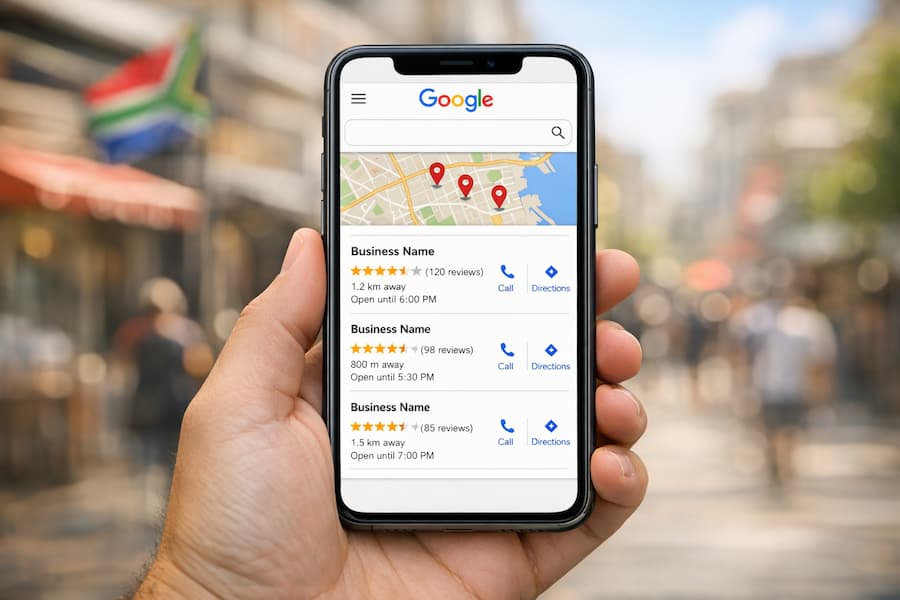
For local businesses, don't forget the Google Local Pack (Map results). Your local pack competitors might be different from those in organic web results. Search "[Your Service] near me" or "[Your Service] [Your City, SA]" and note the businesses appearing in the map results.
Step 2: Uncover Their Keyword Strategy & Content Gaps
Understanding what keywords your competitors are targeting and what content they're creating is critical for finding your own opportunities.
2.1 Keyword Analysis: What Are They Ranking For?
Using paid SEO tools, analyse your competitors' top organic keywords. Look for:
- **High-Volume Keywords:** What are the most popular search terms driving traffic to them?
- **High-Value Keywords:** Which keywords indicate high purchase intent (e.g., "buy [product] online SA")?
- **Long-Tail Keywords:** Are they ranking for specific, conversational phrases that you could target?
- **Local Keywords:** For local competitors, what location-specific keywords are they using?
Identify **keyword gaps** – terms they rank for that you don't, or terms that neither of you are effectively targeting.
2.2 Content Analysis: What Content is Driving Their Success?
Examine the top-ranking pages of your competitors. Ask:
- **Content Formats:** Are they using blog posts, guides, videos, tools, or infographics?
- **Content Depth & Quality:** How in-depth are their articles? Is the information accurate and well-researched?
- **Keywords in Content:** How are they integrating keywords naturally into their content, headings, and meta descriptions?
- **Content Gaps:** What topics related to your industry are your competitors *not* covering, or covering poorly? These are your opportunities for content marketing.
- **User Engagement:** Look at comments, social shares, and estimated time on page (if available) to gauge content effectiveness.
2.3 SA-Specific Content Nuances:
Look for how competitors are localising their content. Are they addressing South African pain points (e.g., load shedding solutions, local regulations)? Are they using local language or examples?
Step 3: Dissect Their Backlink Profile (Where Are They Getting Links?)
Backlinks are a major ranking factor. Analysing your competitors' backlink profiles will reveal valuable link building opportunities.

3.1 Use Backlink Analysis Tools:
Paid SEO tools (Ahrefs, SEMrush, Majestic) provide detailed backlink reports.
- **Referring Domains:** How many unique websites link to your competitor?
- **Domain Authority/Rating:** What's the strength of their overall backlink profile?
- **Anchor Text:** What text are they using in their backlinks?
- **Link Types:** Are they getting editorial links, directory links, guest post links, or resource page links?
3.2 Identify Link Building Opportunities:
Focus on identifying websites that link to your competitors, but not to you. These are your best targets.
- **Replicable Links:** Can you get listed in the same directories, industry associations, or local business groups?
- **Broken Link Building:** Find broken links on sites that link to your competitors and suggest your content as a replacement.
- **Content Gaps for Linkable Assets:** If competitors are getting links for specific content pieces, can you create something even better and reach out to the same linking sites? (See Link Building Strategies for SA Businesses for more.)
- **Local Link Sources:** For local competitors, identify links from local news sites, community blogs, or municipal websites.
Step 4: Analyse Their Technical SEO & User Experience
Even strong competitors can have technical flaws. Identifying these can give you an edge.
4.1 Website Performance & Core Web Vitals:
Use tools like Google PageSpeed Insights (free) or GTmetrix to check your competitors' website speed and Core Web Vitals scores. If they're slow, it's an opportunity for you.
- **Mobile Responsiveness:** How well does their site perform on mobile? Given SA's mobile-first landscape, this is critical.
- **Uptime & Load Shedding Resilience:** For SA businesses, note how well their sites handle load shedding impacts.
4.2 Indexation & Crawlability:
Look for any issues that might be preventing their content from being fully indexed by Google (though this is harder to see for competitors without GSC access).
- **Site Structure:** How organised is their website? Is it easy to navigate?
- **URL Structure:** Are their URLs clean and descriptive?
4.3 Schema Markup Implementation:
Use Google's Rich Results Test to see if competitors are using schema markup, and if so, which types. This can reveal opportunities to gain rich results in the SERPs.
Step 5: Synthesize Insights & Develop Your Action Plan
Collecting data is one thing; turning it into an actionable strategy is another.
5.1 SWOT Analysis for SEO:
Conduct a simple SWOT (Strengths, Weaknesses, Opportunities, Threats) analysis based on your competitor research.
- **Strengths:** What do competitors do well that you need to emulate or surpass?
- **Weaknesses:** Where are their gaps in content, links, or technical SEO? These are your direct opportunities.
- **Opportunities:** Untapped keywords, new content formats, niche markets, or new link building avenues.
- **Threats:** What are they doing that could negatively impact your rankings?
5.2 Prioritise Your Efforts:
Focus on high-impact, achievable actions:
- **Quick Wins:** Keywords they rank for that you could easily outrank with better content or minor optimisation.
- **Content Gaps:** Create superior content for topics they've missed or covered poorly.
- **Link Gap Analysis:** Target the referring domains that link to your competitors but not to you.
- **Technical Fixes:** If your site has major technical issues, prioritise those first.
5.3 Document & Monitor:
Keep a clear record of your analysis and your action plan. Continuously monitor your competitors (and your own performance) using tools like those mentioned in our SEO Reporting & Analytics Setup Guide.
Conclusion: Strategic Intelligence for South African SEO Dominance
SEO competitor analysis is not a one-time task; it's an ongoing process of strategic intelligence that fuels your organic growth. For South African businesses, understanding your rivals' digital footprint – from their keyword strategies to their backlink profiles and technical performance – provides the insights needed to make informed decisions and carve out your unique space in the market.
By transforming competitive data into actionable strategies, you can stop reacting and start proactively dominating your niche. Don't just compete; outsmart your competition with a data-driven approach.
Ready to uncover your competitors' SEO secrets and dominate your market? Contact NexusSEO for a free competitor analysis consultation and let's build your winning strategy.
Frequently Asked Questions: Competitor Analysis in South African SEO
1. What's the difference between business competitors and SEO competitors?
Your business competitors aren't always your SEO competitors. A local plumber might compete with online service marketplaces for keywords like "plumber near me." SEO competitors are determined by who ranks for the keywords your target audience searches for—regardless of whether they're direct business rivals. Always research based on search intent, not just market segments.
2. How often should I conduct competitor analysis?
Conduct a comprehensive competitor analysis quarterly, but monitor key metrics monthly. The SEO landscape changes continuously—new competitors emerge, strategies shift, and algorithm updates alter rankings. A quarterly cadence ensures you stay ahead of trends without micromanaging. For highly competitive industries, consider monthly deep dives into your top 3-5 competitors.
3. What are the best free tools for competitor analysis?
Free tools include Google Search Console (for your own site), Google PageSpeed Insights, Ubersuggest's free tier, and Google Trends. However, free tools have limitations—they won't show competitor backlinks or detailed keyword data. For serious competitor research, invest in at least one paid tool (Ahrefs, SEMrush, or Moz). Many offer affordable plans starting around $99/month, which is essential for staying competitive.
4. How do I identify my local SEO competitors in South Africa?
For local SEO, search your primary keywords + your city name (e.g., "SEO agency Johannesburg") and examine both organic and Google Local Pack results. Check who appears in the map results—these are your true local competitors. Additionally, search "[Your Service] near me" and analyse the businesses appearing. Use SEMrush or Ahrefs' Local Pack feature to automate this for all major South African cities where you operate.
5. What's more important to analyse—keywords or backlinks?
Both are critical but serve different purposes. Keywords reveal *what* competitors are ranking for and *what* their audience searches. Backlinks reveal *where* their authority comes from and *how* to build similar authority yourself. Start with keywords to understand opportunity, then analyse backlinks to understand how to compete. In South Africa, local citations (backlinks from business directories and local sites) are equally important for local rankings.
6. Can I access my competitor's Google Search Console data?
No. Google Search Console data is private to account owners—you cannot access competitor data directly. However, you can use alternative tools to estimate their traffic and keywords. Google PageSpeed Insights, Ahrefs, SEMrush, and Moz provide estimates of organic traffic and keyword rankings. These aren't 100% accurate but offer sufficient insight for competitive analysis. For more precision, use tools like Similarweb or Contentsquare.
7. How long does it take to see results from competitor analysis?
Competitor analysis itself is quick (1-2 weeks for initial research), but *implementing* insights takes time. Quick wins (low-competition keywords, content gaps) may show ranking improvements in 4-8 weeks. Major improvements (building backlink profiles, creating pillar content) take 3-6 months. Expect 6-12 months to significantly outrank established competitors. The key is consistency—competitor insights are only valuable when actioned systematically over time.